What Is Hardwood Floor Sanding and Refinishing in Toronto?
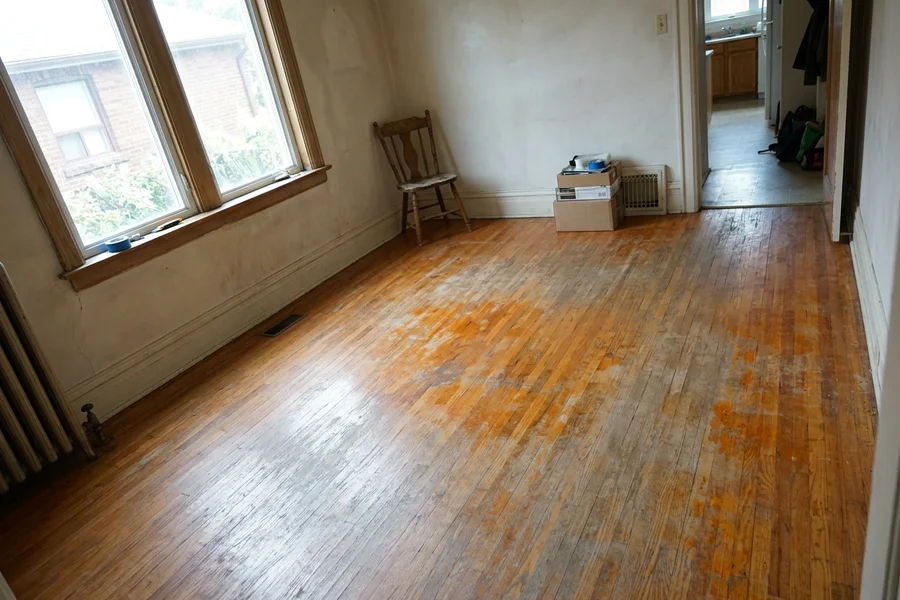
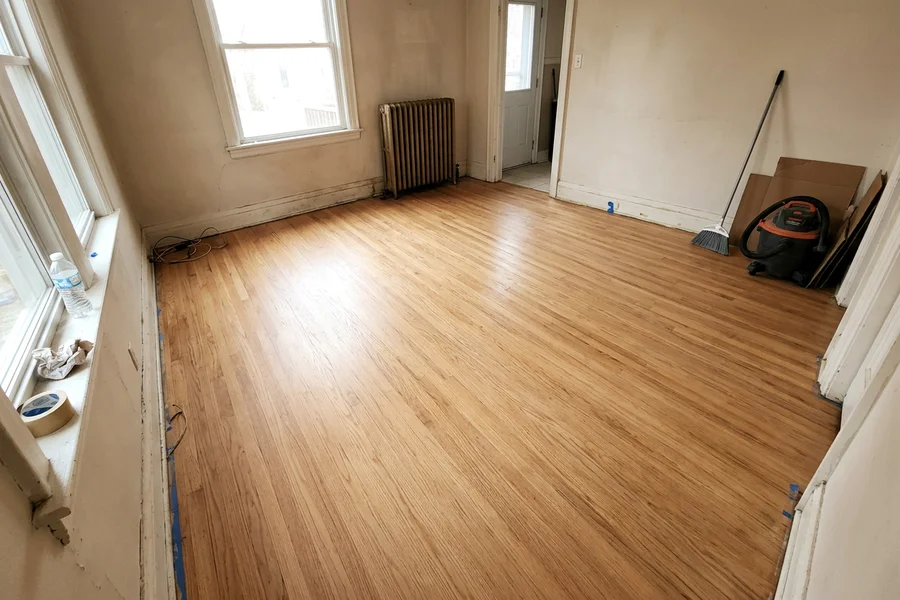
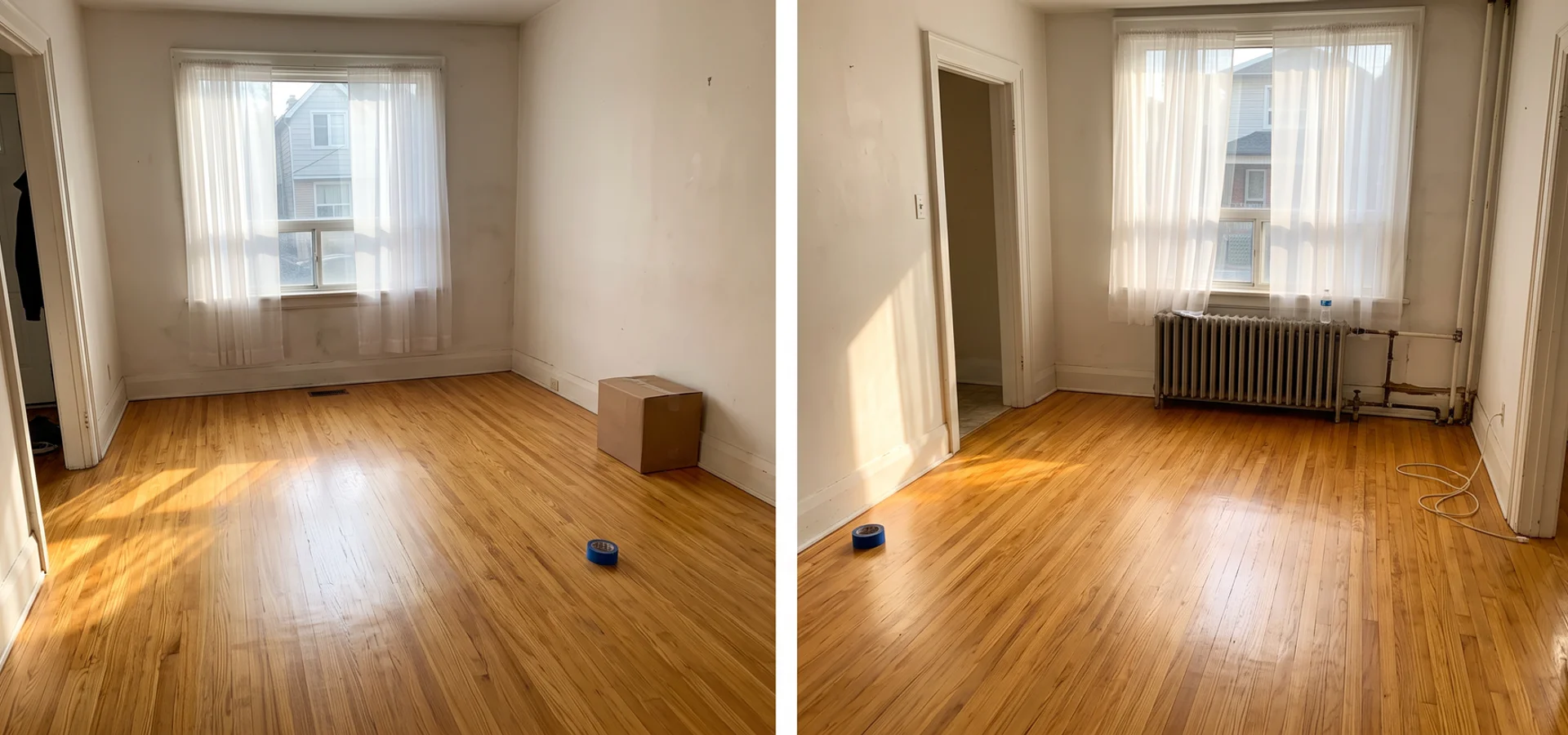
Hardwood floor sanding in Toronto means taking a worn floor back to bare wood and building a brand-new finish on top. It is the right fix when the finish has worn through in traffic lanes, the wood has greyed, scratches go deeper than the finish, or you want a different colour. A screen and recoat cannot do any of those things.
Every job starts the same way. We read moisture content with a pin-type moisture meter, because sanding a floor that is still swollen from summer humidity or a leak locks in problems. We pull a floor vent to see how much wood is left above the tongue. Then we test the old finish so we know what we are sanding through.
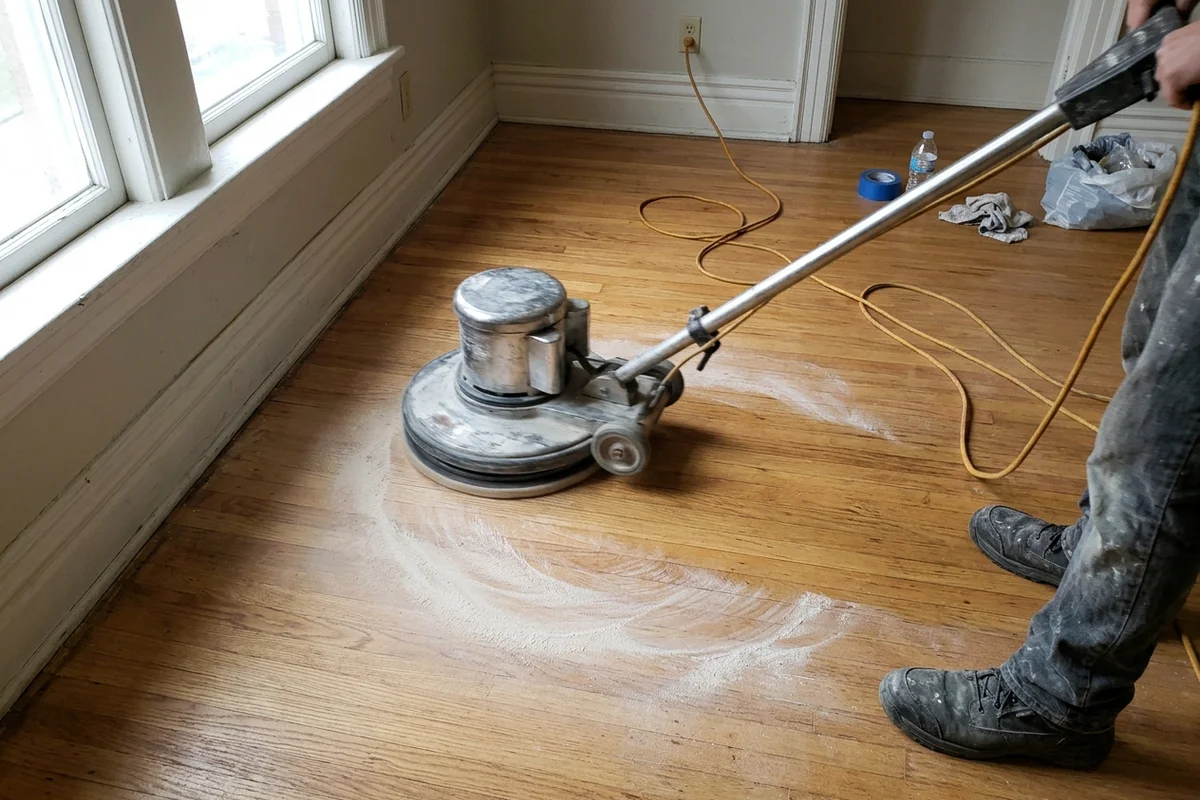
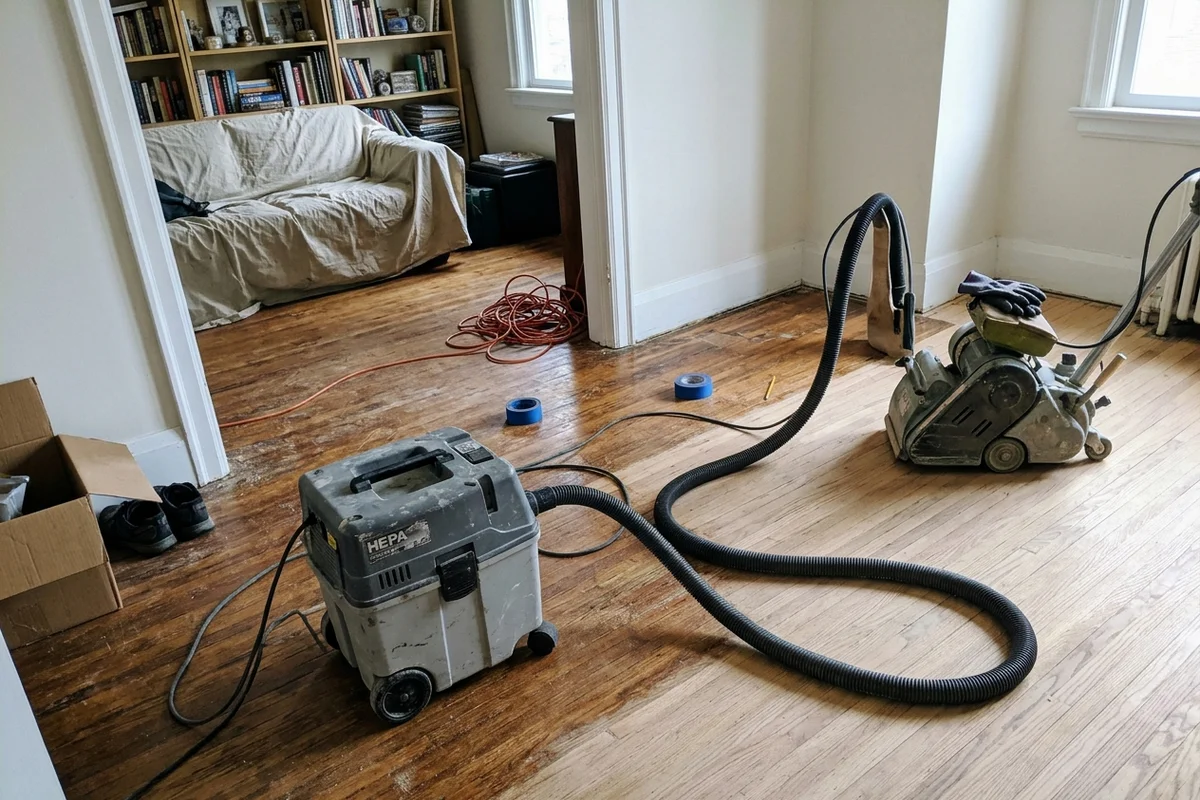
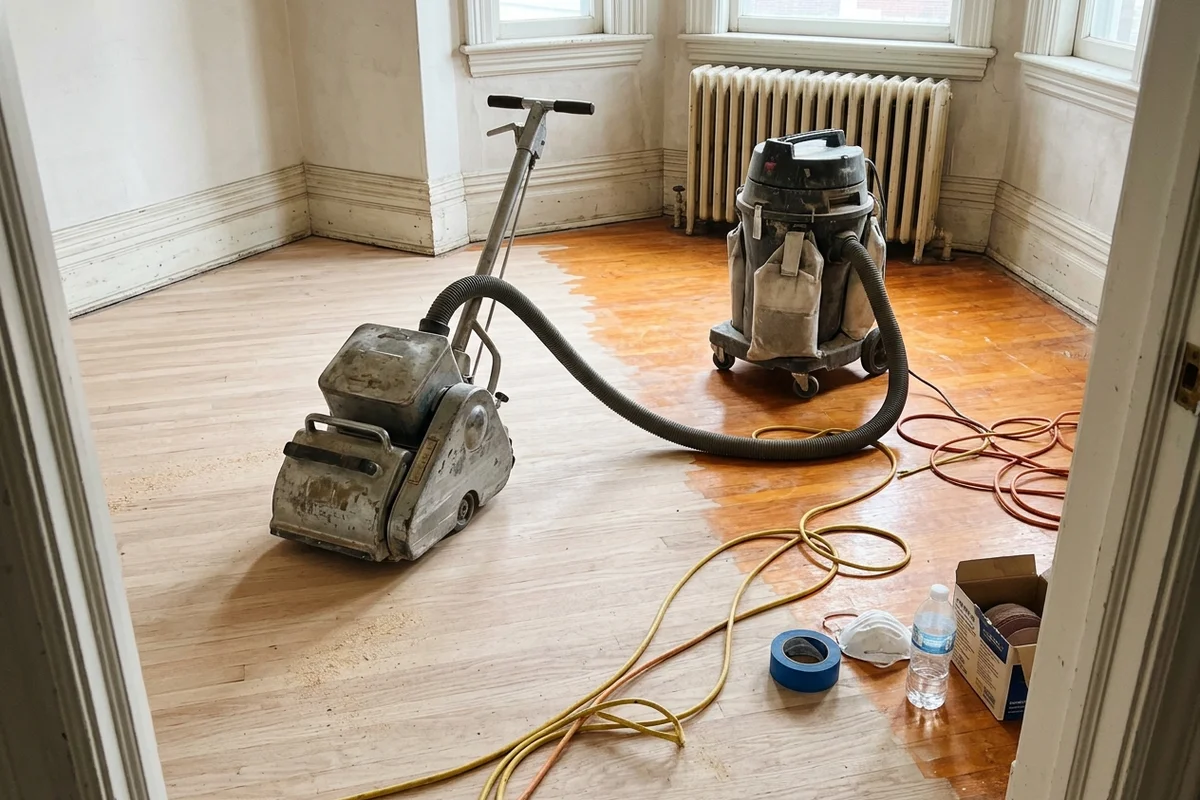
Sanding follows the NWFA Sand and Finish Guidelines. We use a 3-grit progression: 36 grit to cut through the old finish and level the boards, 60 grit to remove the 36-grit scratch, and 100 grit to refine the surface for stain or finish. The main field is sanded with the Lagler Trio, a planetary machine that is far less likely to leave the drum sander chatter marks and dips you see on floors done by rushed crews. The perimeter is sanded with a Clarke American edger, and corners, closets and stair landings are hand-detailed. Every one of those machines is connected to Festool HEPA extraction.
Which Finishes Do We Use?
Our default is water-based. Bona Traffic HD is a two-component, commercial-grade finish rated for heavy traffic. It cures in 24 hours, stays under 50 g/L VOC and remains clear on white oak and maple instead of yellowing. Loba 2K Supra is our other workhorse, with a slightly different sheen range and excellent chemical resistance in kitchens.
Some owners want the warmer amber glow of oil-based polyurethane, especially on heritage red oak in Rosedale and The Annex. We apply Minwax Super Fast-Dry, Varathane or DuraSeal on request. Expect 48-72 hours of cure time and more odour.
For a matte, natural look that you can spot repair, we apply Rubio Monocoat hardwax oil. It bonds to the top fibres of the wood in a single coat and is popular with Annex and Leaside owners who want the floor to look like wood rather than plastic.
How Does Custom Stain Matching Work?
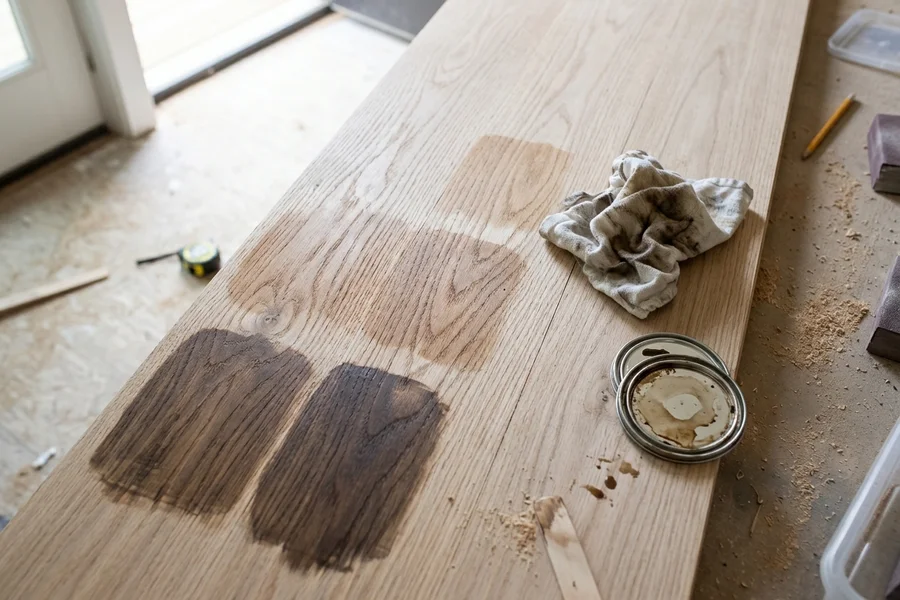
Colour is where most Toronto hardwood refinishing jobs succeed or fail. After the final 100-grit pass, we water pop the floor: a light, even dampening that opens the grain so stain absorbs consistently. Then we lay out test patches with Bona DriFast or Minwax stains on your actual boards, in your actual light. You choose, and we stain the room in one continuous session to avoid lap marks.
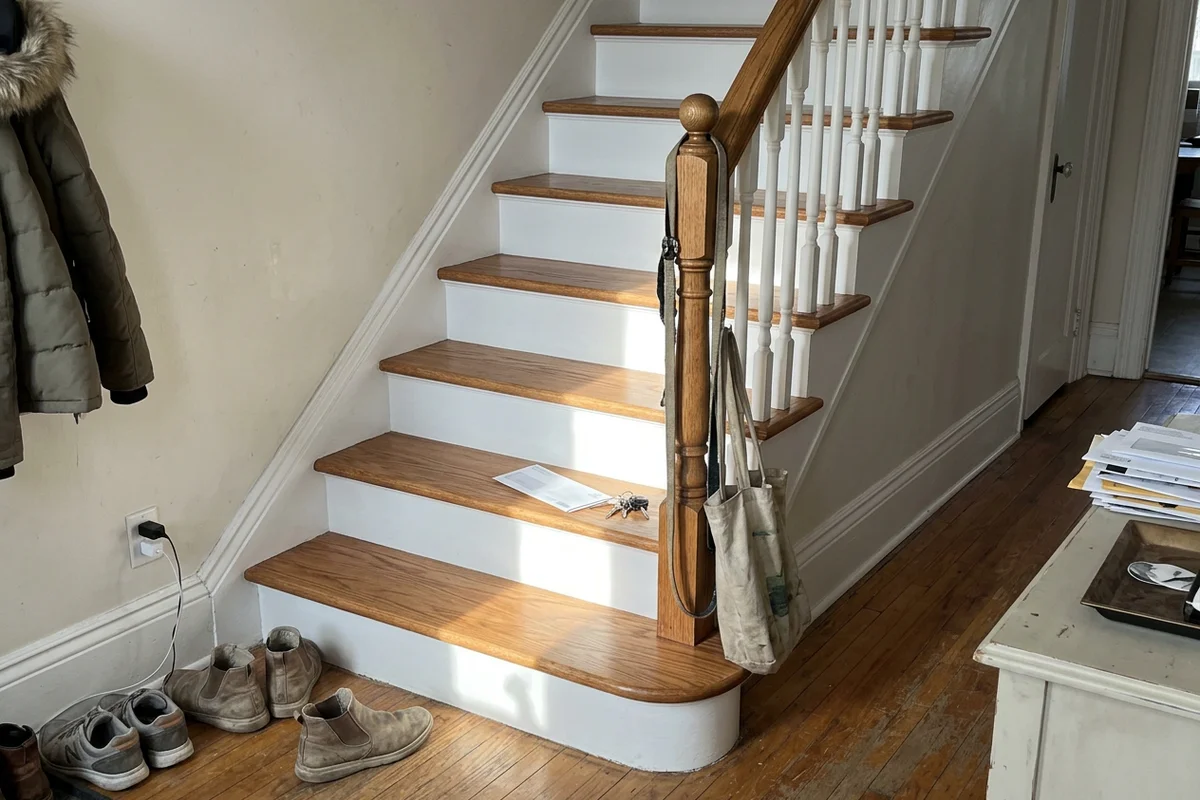
Red oak has a pink-orange undertone, so cool greige tones need a careful blend. White oak takes natural, brown and smoked looks evenly. Maple blotches with dark stain, so we use a conditioner or steer you toward lighter tones. If you are matching new stair treads or a patched area, we stain them in the same session as the floor.
How Much Does Hardwood Floor Refinishing Cost in Toronto?
Our published range is $3-$5 per sq ft for a standard refinish: sand, optional stain and 3 coats of finish. That is all-in. Dustless HEPA sanding is not an extra.
| Floor size | Typical price range | Typical timeline |
|---|---|---|
| 500 sq ft condo or main room | $1,500-$2,500 | 2 days |
| 1,000 sq ft main floor | $3,000-$5,000 | 3 days |
| 1,500 sq ft main floor | $4,500-$7,500 | 4 days |
| 2,000 sq ft two levels | $6,000-$10,000 | 4-5 days |
What moves the price within that range:
- Condition. Deep pet damage, black water stains and heavy wax build-up need more sanding and sometimes board replacement.
- Stain vs natural. A natural finish saves the stain step; a dramatic colour change on maple may need conditioner and extra time.
- Finish type. Hardwax oil and premium two-component finishes cost more than single-component poly.
- Repairs. Board replacement, dutchman repairs and water damage typically add $600-$3,000.
- Access. Condo freight elevators, loading docks and paid parking are listed as separate lines.
Use the cost calculator below for a quick estimate, then book a measure for the written per-sq-ft quote.
When Do You Need a Full Sand Instead of a Recoat?
A quick test: put a few drops of water on the most worn lane. If they bead, the finish is still sealing the wood and a screen and recoat at $2-$3/sq ft may be enough. If the water soaks in and darkens the boards, the finish is gone and you need a full sand.
You also need a full sand if:
- The wood has turned grey or black in traffic lanes or near doors.
- Scratches and dents go through the finish into the wood.
- You want a different stain colour.
- Boards are cupped, crowned or have been replaced and need levelling.
- An old waxed or oil-soap finish will not accept a recoat.
Why Do Toronto Floors Wear Out Faster?
Three forces work on Toronto hardwood. Summer humidity runs 75-85% RH and winter drops to 20-30%, so boards swell and shrink, which leads to cupping, crowning and seasonal gaps. Winter salt and grit grind through polyurethane in entry and kitchen lanes within 3-4 winters. And the city’s heritage housing stock, from Rosedale to Leaside, has floors that have been sanded before and need a lighter touch. We plan every refinish around those three things, and we tell you how to protect the new finish once we leave.
DIY Rental Sander or Professional Refinishing?
Rental drum sanders are the number one cause of ruined floors we are asked to fix. A drum sander that pauses for a second gouges a dip, and on a heritage floor with only 3mm of wood left that dip may be permanent. Rental machines also lack HEPA extraction, so fine oak dust ends up in every room and duct. By the time you add rental fees, paper, finish and a lost weekend or two, the savings are small and the risk is high. Our crews sand dozens of floors a month on calibrated equipment and back every job with a written warranty.
If you also want to recap a carpeted staircase, we can stain-match it in the same visit through our stair refinishing and recapping service, and every job uses our dustless sanding process.