What Does Professional Hardwood Floor Installation in Toronto Include?
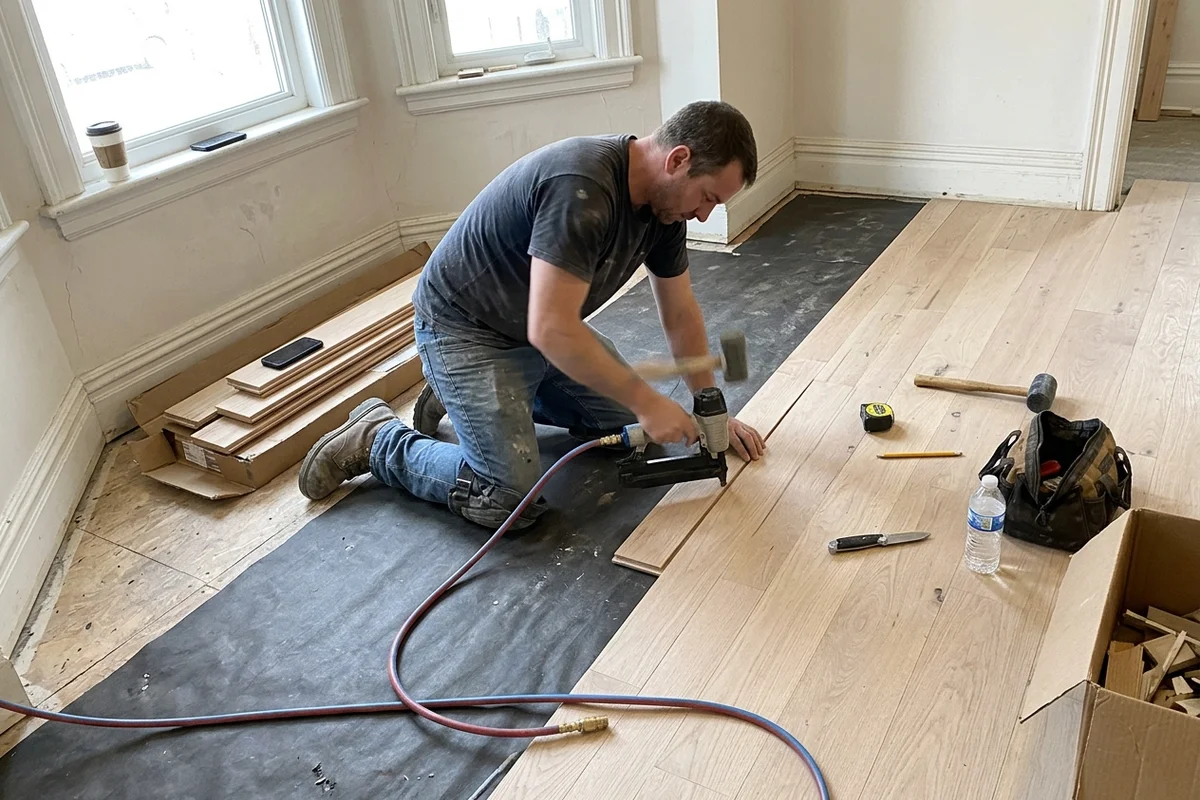
Hardwood floor installation in Toronto is about far more than nailing boards down. Most installation failures we are called to fix, gapping in the first winter, cupping in the first summer, squeaks and hollow spots, trace back to steps that were skipped before the first board went in. As an NWFA Certified Installer and a Toronto hardwood refinishing crew, we follow a set sequence on every job.
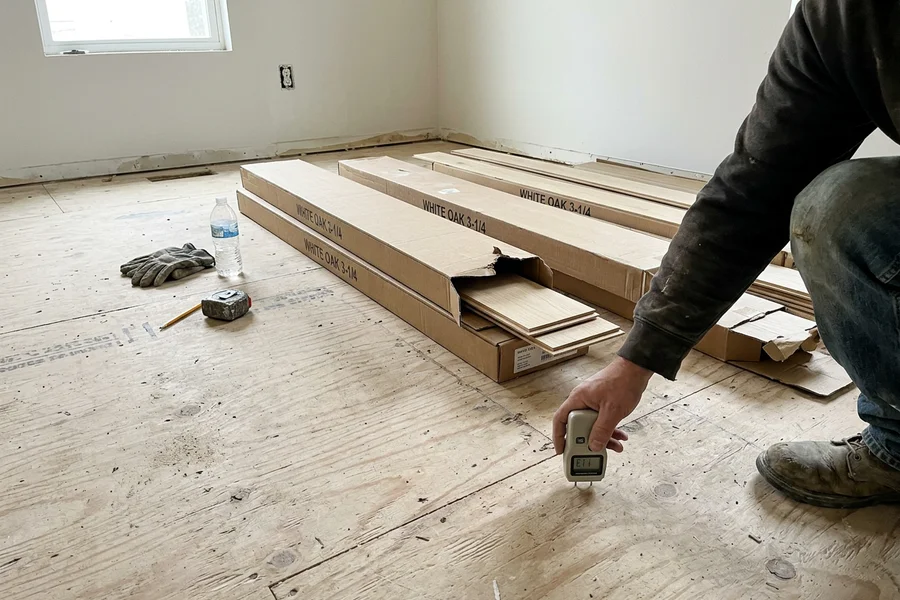
First, we test. A pin-type moisture meter reads the moisture content (MC) of the subfloor and of a sample of boards from several boxes. Toronto’s humidity swings from 75-85% RH in summer to 20-30% in winter, so a floor installed at the wrong MC will move. Boards acclimate in the home until the numbers line up.
Second, we prepare the subfloor. Loose plywood is screwed down to kill squeaks, high spots are planed and low spots filled. Over wood subfloors we lay a vapor retarder; over concrete we use the moisture barrier and adhesive the manufacturer specifies. In condos, we install the acoustic underlayment your corporation requires, with the right IIC and STC ratings documented.
Third, we lay out the floor. Straight lay runs parallel to the longest wall or the main light source. Patterns start from a true centre line snapped off the front door or the focal wall, so herringbone and chevron run straight through doorways instead of drifting. We leave the correct expansion gap at every wall and fixed object so the floor can move with the seasons.
Which Hardwood Should You Choose?
| Option | Best for | Notes |
|---|---|---|
| Solid red or white oak | Above-grade rooms, heritage homes | Sandable many times; white oak takes modern stains evenly |
| Engineered oak | Condos, concrete, radiant heat | More stable; 3-4mm sawn wear layer can be refinished |
| Hard maple | Bright, clean look | Very hard; blotchy with dark stains |
| Walnut | Rich, dark rooms | Softer, shows dents; stunning in wide plank |
| Hickory | Pets, busy families | Very hard, strong grain contrast |
| Brazilian cherry (jatoba) | Warm, exotic look | Very hard; darkens with light |
Every product we install is Lacey Act compliant, meaning the wood is legally harvested and documented, and we favour FloorScore certified products for indoor air quality. Hardness is measured on the Janka scale; it matters most in homes with large dogs.
Which Installation Method Is Right?
Nail-down is the standard for 3/4in solid hardwood over a plywood or OSB subfloor. Cleats are driven through the tongue at a set spacing, so the boards are held tight but can still expand and contract.
Glue-down suits engineered hardwood over concrete slabs and many pattern installs, where each short piece needs full support. It is also the quietest option underfoot.
Floating floors lock together over an underlayment without fastening to the subfloor. It is fast, works over many existing surfaces and is common in condos, as long as the underlayment meets the building’s acoustic rules.
How Much Does Hardwood Floor Installation Cost in Toronto?
Installed cost is $7-$18 per sq ft. Here is how it breaks down:
| Line item | Price |
|---|---|
| Oak / maple materials | $4-$8/sq ft |
| Engineered materials | $4-$9/sq ft |
| Walnut / exotic materials | $8-$12+/sq ft |
| Labour | $3-$10/sq ft |
| Pattern premium (herringbone, chevron) | +$2-$4/sq ft |
Removal and disposal of old carpet, laminate or tile, subfloor levelling and new baseboard are listed separately. Prefinished boards save the sanding and coating step. Site-finished floors are sanded flat and coated with 3 coats of Bona Traffic HD, which gives a smoother surface and complete control over colour.
Herringbone, Chevron and Other Patterns
Patterns are where an installer’s skill shows. Herringbone uses rectangular blocks set at 90 degrees in a broken zigzag; chevron uses angle-cut ends that meet in a continuous V. Both need a precise layout, more cuts and more material waste, which is why they carry a $2-$4/sq ft premium and add 1-2 days per 500 sq ft. Parquet suits 1950s-60s homes and restorations, diagonal layouts make small rooms feel wider, and picket patterns add a heritage touch to a study or dining room. Tap through the pattern picker on this page to compare them.
When Should You Replace Instead of Refinish?
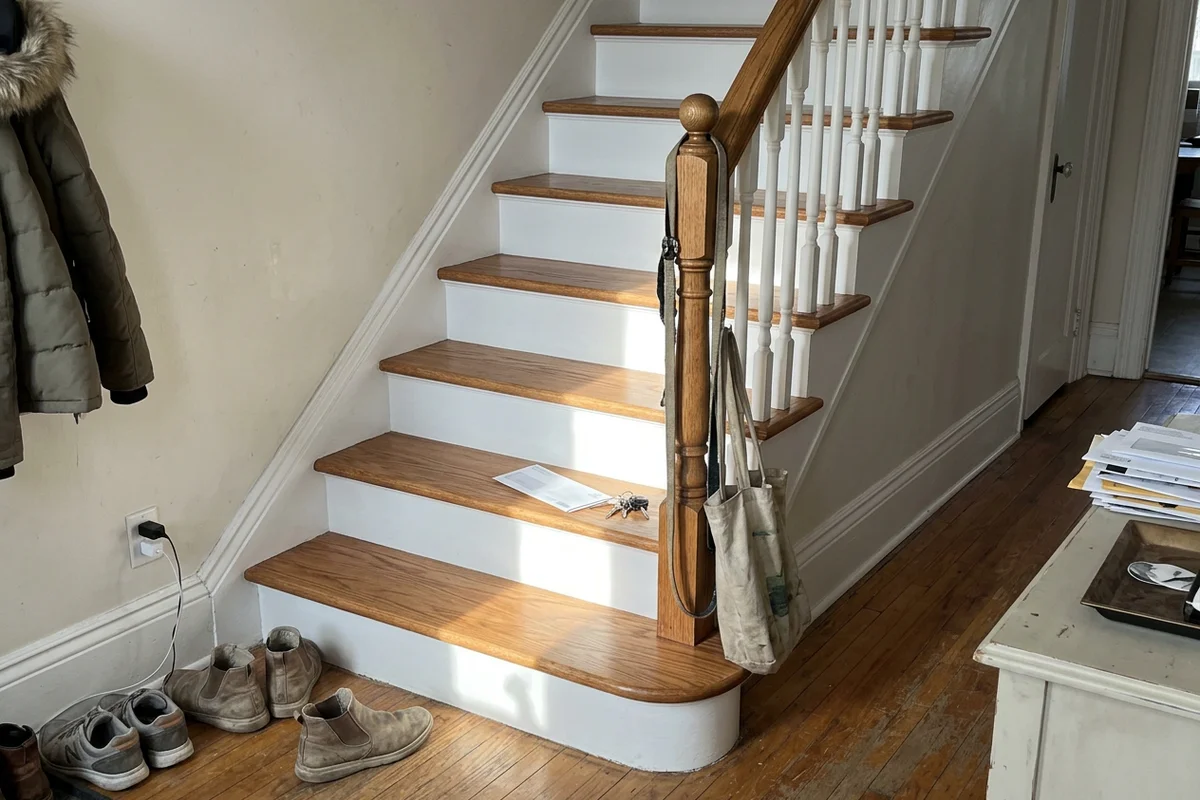
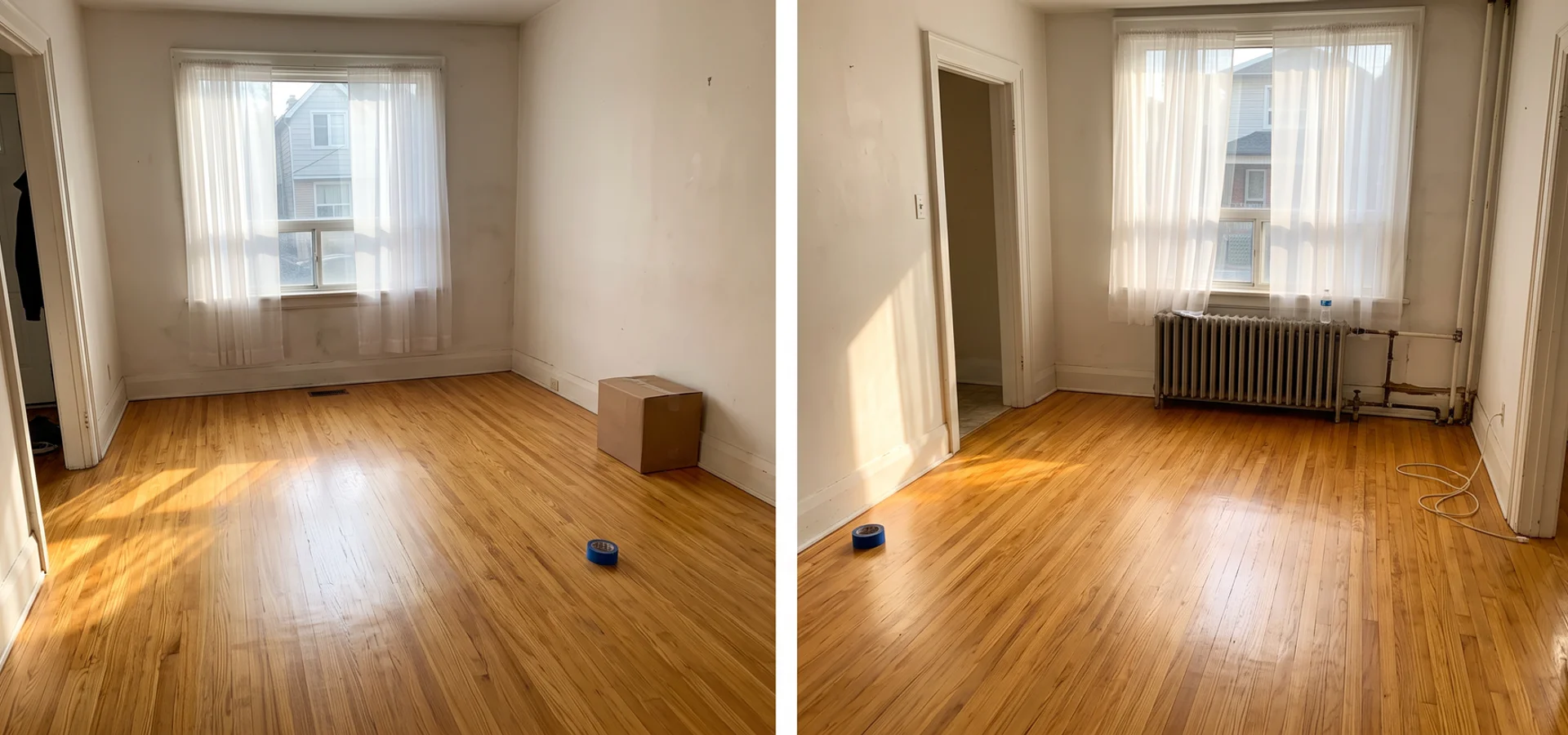
Replacement makes sense when the existing floor is laminate, carpet or builder-grade engineered with a thin veneer, when solid boards have been sanded down to the tongue, or when water damage has reached the subfloor across a large area. If your existing solid hardwood still has wood above the tongue, hardwood floor refinishing at $3-$5/sq ft is usually the better value. New floors pair well with a carpet-to-hardwood stair recap, stain-matched in the same project.